


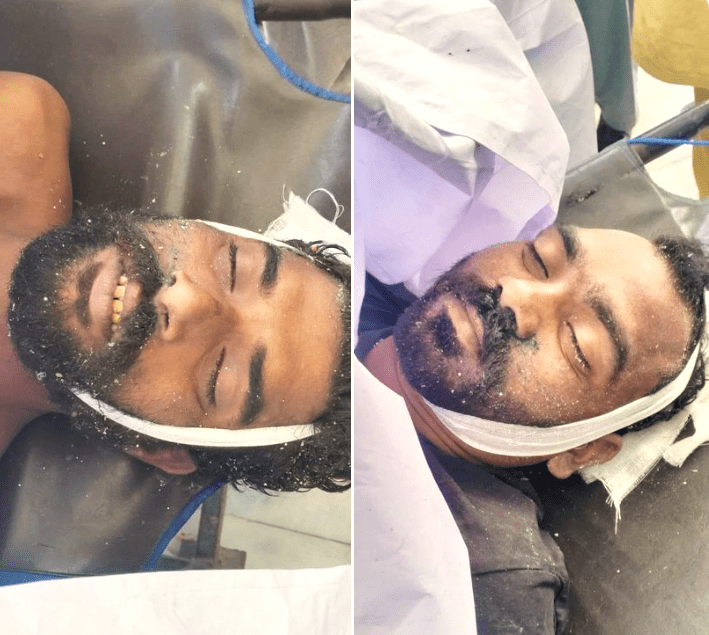
Christian sanitation workers Shan Masih (L) and Asif Masih (R) died on March 17, 2024 from dangerous conditions in sewers of Faisalabad, Pakistan. (CDI-MSN)
LAHORE, Pakistan (Christian Daily International–Morning Star News) – In two landmark rulings, the Islamabad High Court (IHC) on Tuesday (Dec. 9) banned employers from seeking only Christians for sanitation jobs and called for safety measures for sewage cleaners, most of whom are Christian.
The IHC, Pakistan’s federal high court, imposed a strict ban on the use of the phrase “Christians only” in advertisements for waste collectors and sweepers and called for comprehensive and urgent safety measures to curb the increasing number of deaths of sewage cleaners.
Addressing a broader set of concerns in two petitions jointly filed by the Center for Rule of Law Islamabad (CROLI) and the Pakistan United Christian Movement (PUCM), Islamabad High Court Justice Raja Inam Amin Minhas ruled that the wording “Christians only” is discriminatory and must be replaced with “civilian” in all future job postings.
Noting with concern that more than 70 Christian workers have died since 1988 due to exposure to poisonous gases in sewers, while civil society reports documented at least 10 deaths since 2019, the judge observed in another judgment that sewage workers continue to be exposed to hazardous environments and toxic gases without proper protection.
Minhas stated that leaving sewage workers in toxic, deadly conditions without safety precautions amounts to serious negligence. He wrote that “sewage workers are not mechanical parts” and must be provided with complete safety equipment and basic facilities to protect their lives, declaring the continued deaths of Christian laborers engaged in manual scavenging a grave violation of fundamental rights and a persistent failure of the state to fulfill its constitutional obligations.
Ministries and departments, instead of acknowledging their responsibility, have attempted to evade accountability by shifting blame to one another, he stated.
“Has the exercise of public office been reduced to mere evasion of duty?” he wrote. “Does the Constitution of Pakistan not guarantee equal protection to all citizens? Are the lives of sewerage workers less valuable than those of other citizens?”
The court held that the state has a “solemn constitutional obligation” under Articles 9, 25 and 27 to protect the lives, dignity and equality of all citizens, including those performing hazardous work. It further noted that Pakistan’s commitments under the Universal Declaration of Human Rights and domestic labor laws require the provision of safe working conditions.
Sewage workers are routinely exposed to toxic underground gases, risking collapse, death, organ damage and serious infections – dangers that are “entirely avoidable” through proper equipment, monitoring devices and safety protocols, Minhas wrote in his judgment. Continued omission by state authorities, the court held, amounted to a “systemic deficiency” requiring judicial intervention.
The high court directed the federal government to issue a circular to all federal and provincial ministries, autonomous bodies and regulated private entities, ensuring that workers engaged in sewer maintenance are provided with functional protective gear, gas detectors, ventilation arrangements and first-aid facilities. It further ordered that a detailed implementation report be submitted to the deputy registrar judicial within two months, outlining progress on safety reforms and compliance with the new hiring guidelines.
Additionally, the court ordered the Ministry of Law and Justice to initiate legislation or amendments to existing laws to safeguard the rights, safety, compensation and insurance coverage of sewage workers.
Lauding the verdicts, PUCM Chairman Albert David said the two judgments mark a significant legal step toward protecting one of Pakistan’s most marginalized labor groups.
“After a long time, there has been something that has come from a constitutional institution regarding minorities,” David told Christian Daily International-Morning Star News. “We had first tried to address this issue through the executive (government) and also highlighted it in the media, but it did not work. Finally, we decided to move the high court to get relief for the sanitary workers.”
Both the judgments are good because the judge has not just given his views on the issues but has made it binding on the executive to report back on implementation, he said.
The verdict on safeguarding the rights and protection of sanitary workers was not limited to Christians.
“It will impact the lives of all sanitary workers regardless of their religious beliefs,” David said.
The government departments or individuals concerned can now also be held accountable in case the high court’s orders are not executed, he noted.
Pakistan’s National Commission for Human Rights (NCHR) has filed a similar constitutional petition before the newly established Federal Constitutional Court (FCC), seeking an end to manual sewer cleaning. Heard on Nov. 21 by a three-judge bench headed by FCC Chief Justice Aminuddin Khan, the petition highlighted severe and often fatal risks sanitation workers face due to unsafe working conditions, the absence of protective equipment and lack of training.
The NCHR argued that forcing workers into sewers without safety measures violates fundamental constitutional rights, including the rights to life, dignity, equality and a secure working environment.
The petition was based on the NCHR’s report entitled, “Risk of Sanitation Work in Pakistan,” which documents extensive complaints, deaths, injuries and unsafe conditions faced by sanitation workers across the country between 2022 and 2024. The commission received multiple complaints of sanitation workers who lost their lives while on duty.
The NCHR further submitted that Pakistan lacks a uniform national health-and-safety framework for sanitation work. In the absence of regulatory enforcement and emergency response mechanisms, workers are routinely exposed to toxic gases, life-threatening injuries and preventable deaths, it added.
Following the arguments, the FCC issued notices to the respondents, including the Water and Sanitation Agency, waste management companies, and provincial governments.
Sanitation work in Pakistan remains deeply stigmatized and is widely viewed as a caste-based occupation tied to religious minorities such as Christians and Hindus.
A July 2025 Amnesty International report entitled, “Cut Us Open and See That We Bleed Like Them,” found that sanitation workers in Pakistan face systemic discrimination, hazardous conditions and caste-based exclusion in public-sector employment.
Amnesty noted that sanitation work is overwhelmingly assigned to non-Muslims from so-called “lower castes,” often without offering them real alternative employment options. The situation is even more precarious for women sanitation workers, who face “triple discrimination” at the intersection of caste, religion, and gender, it stated.
The report also noted that stigmatization has made sanitation workers vulnerable to violence, including in cases involving blasphemy allegations. It cited several cases of Christian sanitation workers accused of blasphemy, including the country’s most high-profile blasphemy victim, Aasiya Noreen, better known as Asia Bibi.
Data collected from nearly 300 government job advertisements from 2010 to March showed that many explicitly required applicants to be non-Muslim or from “lower castes,” reinforcing historical caste-based employment patterns and effectively pushing non-Muslim workers into sanitation roles.
Pakistan, whose population is more than 96 percent Muslim, ranked eighth on Open Doors’ 2025 World Watch List of the 50 countries where it is most difficult to be a Christian.
If you would like to help persecuted Christians, visit https://morningstarnews.org/resources/aid-agencies/ for a list of organizations that can orient you on how to get involved.
If you or your organization would like to help enable Morning Star News to continue raising awareness of persecuted Christians worldwide with original-content reporting, please consider collaborating at https://morningstarnews.org/donate/?
###
© 2025 Christian Daily International-Morning Star News. Articles/photos may be reprinted with credit to Christian Daily International-Morning Star News. https://morningstarnews.org
Tweet: https://twitter.com/morningstarnewz/
Facebook: https://www.facebook.com/MorningStarNews
Morning Star News is a 501(c)(3) non-profit corporation that relies solely on contributions to offer original news reports of persecuted Christians. By providing reliable news on the suffering church, Morning Star News’ mission is to empower those in the free world to help and to encourage persecuted Christians that they are not forgotten or alone. For free subscription, contact [email protected]; to make tax-deductible donations, visit https://morningstarnews.org/donate/? or send check to Morning Star News, 34281 Doheny Park Rd., # 7022, Capistrano Beach, CA 92624, USA.
-

- Christian sanitation workers Shan Masih (L) and Asif Masih (R) died on March 17, 2024 from dangerous conditions in sewers of Faisalabad, Pakistan. (CDI-MSN)