The great Irish poet William Butler Yeats asked what to do about “decrepit age that has been tied to me as to a dog’s tail?”
Robert Browning, the renowned English poet, on the other hand, urged: “Grow old along with me! The best is yet to be.”
Aging is often viewed as two extremes — the bleak years of Yeats or Browning’s joyful future.
Sign up for Kiplinger’s Free Newsletters
Profit and prosper with the best of expert advice on investing, taxes, retirement, personal finance and more – straight to your e-mail.
Profit and prosper with the best of expert advice – straight to your e-mail.
Most people, however, experience growing older as a combination of delights and difficulties. The joys vary, but almost all face the same struggle — the body or mind (or both) stops performing as in the past.
Warren Mullisen, 81, of Culver City, Calif, was a runner all his life and competed in numerous marathons. It was a perfect complement to his sedentary career as a retail buyer.
But a few years ago, he slipped on loose gravel while running up a trail and fell backwards, hitting his head. He suffered a brain injury that impaired his balance. “The legs don’t seem to move when I’m trying to run,” he says. Despite physical therapy, his neurologist says that most likely won’t change.
It has been, he says, “a daily struggle of coping and adjustment.”
Facing declining abilities is always hard, but especially in a society where the pressure to “age well” is so prevalent. The habits for a happy retirement are fairly clear, but the benefits might not always follow: Exercise, build social networks, take up hobbies, volunteer — and the promised benefit is that “you, too, can remain active and alert as the years pass.”
“Within the field of gerontology, there’s been a huge push over the last couple of decades to address ageism by not equating disability and poor health with later life,” says Michelle Putnam, director of the Gerontology Institute at the University of Massachusetts, Boston.
But when viewed simplistically, the concept of “successful aging” can too easily translate into the idea that people have somehow failed if they’re not healthy, fit and financially well off in later years.
“There is this sort of odd American thing where we believe that we can always be the exception, and somehow the exception becomes the goal or the standard, and we tailor everything towards that exception,” says Putnam.
It’s easy to compare yourself to others who seem to be doing better, but also to your younger self.
“A lot of the struggle comes from the gap between what aging ‘should’ look like in the modern narrative and what aging actually looks like for real people,” says Pouyan Golshani, an interventional radiologist. “It’s the comparison, not the condition, that creates the mental weight. I’ve watched older adults thrive once they stop judging themselves against their younger brain. It’s not about outrunning limitations — it’s about staying curious and adjusting with dignity.”

(Image credit: Getty Images)
Slowing down, but staying in the game
Steven Sultanoff, a clinical psychologist, has played softball for 58 of his 72 years. For decades, he played outfield on some of the top competitive recreational teams in Orange County, Calif. But his once strong throwing arm and fast legs have weakened and slowed, particularly over the past five years.
He moved from outfield to infield, but even then, “there were a few teams where managers said to me, ‘You know, you’re really no longer competitive with the team, and I’m not going to ask you back next season,'” he says.
“I certainly felt sad that I couldn’t perform at that level, disappointed and frustrated, but I wasn’t particularly upset,” he says. “I just realized that it was time to look at my softball world and how I could manage.”
He plays fewer games per week to allow his body to recover — he’s now down to two nights a week from five. He’s on less competitive teams. When his hitting flagged, he gave up his beloved bat to buy a more modern one that has more pop, allowing him to hit farther.
“I’ve shifted my attitude from being highly competitive and really having to win, which was my position when I had my high-end team, to playing for fun and doing the best I can within that,” he says.
That attitude shift, experts say, is necessary as people grow older. The answer isn’t denial or forced positive thinking but “holding losses and acceptance together,” says Julie Erickson, a clinical psychologist in Toronto who specializes in helping people adjust to the challenges of getting older.
“There has to be ample time to come to terms with a whole host of different feelings that need acknowledgement and working through — it could be grief, anxiety, anger, disbelief, guilt, shame,” she says. It’s necessary “to be able to identify and talk about those feelings, not only with a therapist, but with critical people in your life. It’s not about dismissing what’s happening, but also not falling into passive resignation either.”
Mullison, the runner who can no longer run, found that to be true. He tried to do everything people typically suggest to adjust to his new reality. He read self-help books and wrote gratitude lists. He tried to replace running with yoga, meditation, tai chi and swimming, but none of those satisfied him. As a veteran, he even attended a veteran’s support group for those with brain injuries, but it didn’t click.
Then, Mullison says, his neurologist told him, “I can give you advice about your physical condition, but beyond that, you need someone to talk to about how you can handle this mentally.”
After winning a year-long battle with his insurance company to pay for in-person therapy sessions, he found that having a trained expert to talk to has proved promising.
“I’m realizing that doing it on my own is far more difficult than having someone that I can talk to about it,” he said.
(Image credit: Chris Goodney/Bloomberg via Getty Images)
What is aging well?
Most people say they want to age well, but what exactly does that mean?
A 2024 international survey found that among the almost 2,000 people who responded, the most prominent theme when asked to define aging well was “active, independent and engaged.”
“That is in contrast to the conception that successful aging is solely or predominately related to the absence of disease or decline,” the authors wrote.
Survey participants — with an average age of 71 (but ranging from 65 to 99) — were spread across the United Kingdom, Ireland, Australia, New Zealand, Canada and the United States. Almost 85% also said they were probably or definitely successfully aging, while only 6.4% said they were definitely or probably not
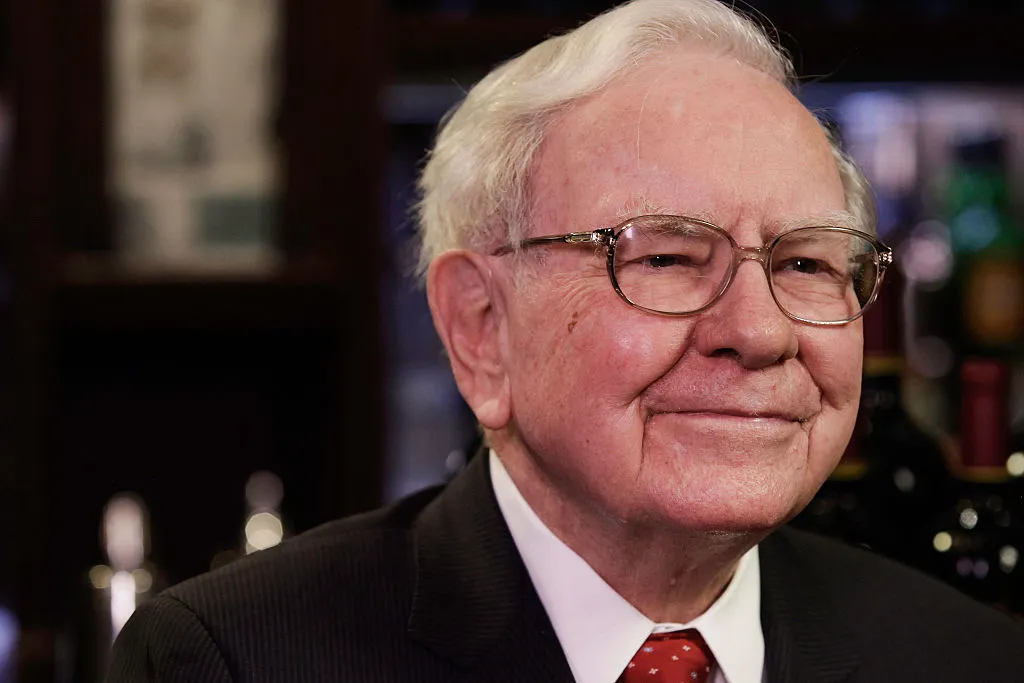
But “active, independent and engaged” can mean different things to different people. Warren Buffett, 95, storied chairman of Berkshire Hathaway, said in an interview with The Wall Street Journal that he didn’t really start feeling old until he was 90, when his balance became a little off, and his recall of people’s names dimmed. He stepped down as CEO late last year.
“There’s no magic moment,” he said in the interview. “How do you know the day that you become old?”
But for every Buffett, for every 101-year-old Italian barista who has no intention of retiring, or 100-year-old marathoner, there’s the 75-year-old with Parkinson’s enjoying lunch with a friend and a little gardening, who still feels largely content.
Perhaps it’s easier to think about aging in relation to autonomy, competence and relatedness, Erickson says, the psychological traits considered necessary for human growth, motivation and well-being.
Autonomy, for example, is important, she says, but there’s more than one way to look at it — “less about being independent and a little more about choice. Does illness start to limit us in terms of what choices we can make? Absolutely. Does it preclude us from making all choices? No, absolutely not. So, it’s a little bit about identifying where are the opportunities to still exert choice over something, even if it’s small.”
After all, she adds, “independence is a bit of an illusion. None of us is completely independent, even when we’re able-bodied.”
A recent Pew Research survey on how Americans think about aging and experiences found that 67% of those 65 years and older believe they have control over their physical health and 60% over their physical mobility. Fewer than half (47%) believe they have control over their mental sharpness.
The reality is, according to the United States Census, that almost a quarter of those 65 and older have a disability. That number nearly doubles, to 46%, for those 75 and older.
Outside factors that influence aging
Of course, health and wealth do play a role in how comfortable and active one is during later years. Research has repeatedly found that those with lower household wealth or socioeconomic status see greater declines in numerous areas — including physical capabilities, cognitive function and social engagement — than those in wealthier households.
The Pew survey found that some 61% of those with higher income say they are aging extremely or very well, compared to 51% of those in the middle-income tier and 39% of those with lower income. Those in the upper income level were also more likely to rate their physical and mental health as high; they also reported spending more time on hobbies, being with friends and being active in some sort of civic group or club.
The model of aging successfully — and blaming individuals if they fail to live up to it — “really does make so many assumptions about what’s been available to people over their life course,” Putnam says.
“Particularly in later life, in order to really get to that spot where you’re doing fantastic and you don’t have a lot of health problems, you probably had health insurance your whole life,” she says. “You probably had a job that wasn’t crazy physically demanding. You probably didn’t experience a lot of physical violence or abuse.”
And that’s one of the many reasons the issues around aging — and the burden of aging well — should not be placed solely on the individual, but on society as well, she says.
Innovation and imagination can improve adaptability
Some changes to make aging easier can be easy and inexpensive, such as installing benches in grocery stores and other places for a brief respite or toning down background music to make it easier for people to hear.
“Lack of imagination results in exclusions,” Putnam says. “Being more inclusive of older adults is good for everybody, and sometimes that gets lost.”
Take the invention created by Kerry Mellin of Calabasas, Calif. Mellin, 68, worked as a costumer in the film industry until she retired in 2020. The job took a major toll, particularly on her hands, because she spent her days sewing, cleaning, washing and costuming.
Mellin also owns a ranch and does all the work involved with running it. She loves her ranch and riding her horses; it feeds her soul, she says, but it’s also very difficult. Her back is damaged from years of horseback riding.
More than a decade ago, “in my favorite place, the barn, I literally could not grip my broom,” she says. “I thought, ‘What will my life look like if that satisfying feeling of a job-well-done, doing-it-yourself was behind me just because my body’s getting older?'”
So, she looped some duct tape on the broom handle to make it easier to hold. That was the beginning of a business she started with her sister in 2014: making silicone adaptive grip handles called Eazyhold for everything from forks to gardening tools to golf clubs.
Millions have been sold around the world, Mellin says, but the majority are used by infants and children with disabilities — a prime example of how developing aids for older adults can help many others not in their aging years.
Says Mellin: “For me, coping with getting older has meant being honest about my new frailties as I age, continuing to look for solutions to adapt to those new limitations and staying deeply committed to continuing to find a way to do the things I love.”

(Image credit: Getty Images)
Lessons learned about aging well
Almost everyone faces physical and mental decline as they age, but that doesn’t mean all such symptoms are solely due to getting older. Sometimes, too much or the wrong medication can cause confusion and memory loss, mimicking dementia.
Physical or occupational therapy can help improve strength and mobility at all ages. If your doctor or other medical provider is dismissive of your concerns, seek out another.
If a physical or mental limitation does prevent you from doing something you once enjoyed or that gives you a sense of worth, take time to acknowledge and grieve that loss. Try not to see it as surrender, but as acceptance of a new stage in life.
You may not be able to ski as you did 20 years ago or drive long distances, but can you continue the activity in a limited way? It can help to consult with an expert. Occupational therapists trained as driver rehabilitation specialists, for example, can evaluate older drivers and, in some cases, offer ways to help them continue driving.
Don’t fall into the trap of thinking there is a “right way” to age. As Dr. Erickson asks, “How could we subject anything as complex as aging to being black and white? Even knowing someone’s age tells us nothing about them or their experience of age.”
Note: This item first appeared in Kiplinger Personal Finance Magazine, a monthly, trustworthy source of advice and guidance. Subscribe to help you make more money and keep more of the money you make here.