


Price: $12.99
(as of Apr 27, 2026 17:03:23 UTC – Details)

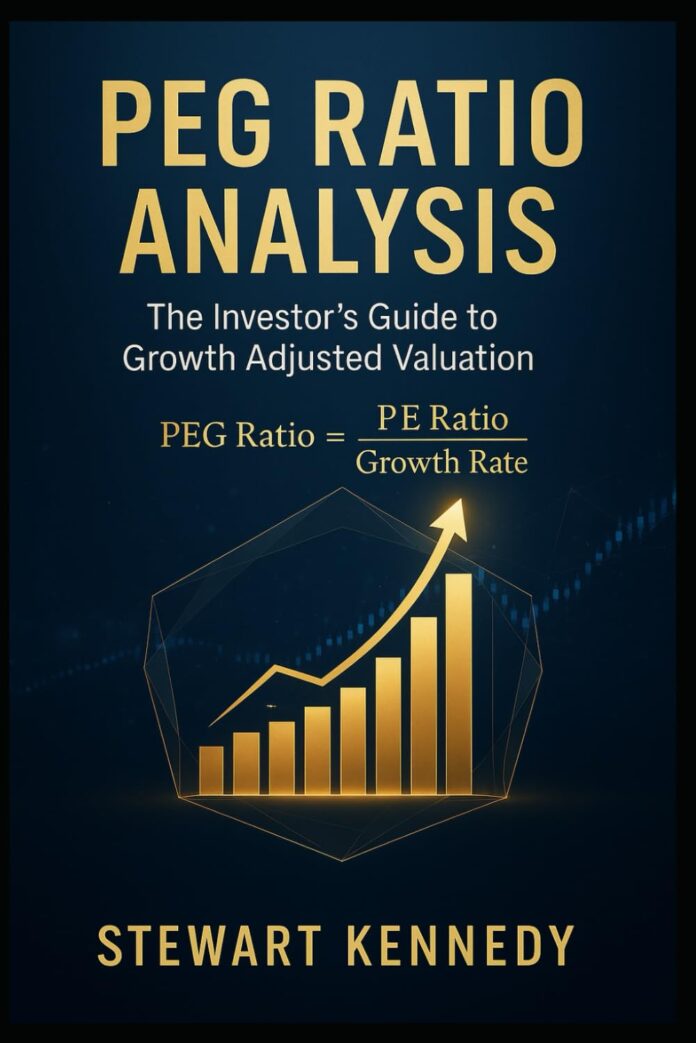
In the world of intelligent investing, valuation and growth have long been treated as separate forces — one rooted in discipline, the other in ambition. PEG Ratio Analysis bridges that divide. In this clear and comprehensive guide, Stewart Kennedy explains how the Price to Earnings Growth (PEG) ratio allows investors to unite value and growth into a single framework of rational analysis.
The book begins by tracing the evolution of valuation thinking from simple price-to-earnings multiples to modern growth-adjusted models. It introduces the PEG ratio not as a formula to memorize but as a way of thinking — one that connects the price investors pay with the rate at which earnings can realistically expand. Through carefully written explanations and real-world examples, Kennedy shows how this simple ratio can illuminate the balance between fair price and future potential.
Readers learn how to calculate the PEG ratio accurately, interpret it across industries, and apply it within various investment philosophies including growth investing, value investing, and GARP (growth at a reasonable price) strategies. Each chapter moves beyond theory to show how investors can apply PEG analysis in practice — from screening stocks and evaluating earnings forecasts to interpreting ratios across economic cycles and international markets.
The book also explores the behavioral and psychological aspects of PEG investing. It explains how cognitive biases, emotional decision-making, and herd behavior can distort interpretation, and how disciplined methodology restores objectivity. Kennedy illustrates these lessons through historical case studies of companies like Apple, Amazon, and Procter & Gamble, demonstrating how PEG ratios evolve with market sentiment and business fundamentals.
Later chapters extend the discussion to portfolio management, analyst research, and quantitative modeling. The PEG ratio’s role in institutional analysis and data-driven investing is explored with practical insight. Kennedy also considers the future of PEG in an era of slower global growth, technological transformation, and algorithmic finance, arguing that its relevance endures because it captures an unchanging truth — value must always be viewed through the lens of sustainable growth.
PEG Ratio Analysis equips readers with both the analytical tools and the disciplined mindset required to make sound valuation judgments. It is a book for those who seek clarity amid the noise of financial markets, a guide that teaches how to see through numbers and uncover the true relationship between price, growth, and value.
For professional analysts, long-term investors, and students of finance alike, this book stands as a complete manual for mastering one of the most elegant concepts in modern investing — the art of valuing growth intelligently.
ASIN : B0FXBJ3TT6
Publisher : Independently published
Publication date : October 22, 2025
Language : English
Print length : 160 pages
ISBN-13 : 979-8271037924
Item Weight : 10.6 ounces
Dimensions : 6 x 0.37 x 9 inches
Part of series : The Investing Essentials Library
Best Sellers Rank: #5,175,617 in Books (See Top 100 in Books) #4,411 in Stock Market Investing (Books) #4,514 in Retirement Planning (Books) #7,442 in Business Decision Making
Customer Reviews: 4.0 4.0 out of 5 stars (1) var dpAcrHasRegisteredArcLinkClickAction; P.when(‘A’, ‘ready’).execute(function(A) { if (dpAcrHasRegisteredArcLinkClickAction !== true) { dpAcrHasRegisteredArcLinkClickAction = true; A.declarative( ‘acrLink-click-metrics’, ‘click’, { “allowLinkDefault”: true }, function (event) { if (window.ue) { ue.count(“acrLinkClickCount”, (ue.count(“acrLinkClickCount”) || 0) + 1); } } ); } }); P.when(‘A’, ‘cf’).execute(function(A) { A.declarative(‘acrStarsLink-click-metrics’, ‘click’, { “allowLinkDefault” : true }, function(event){ if(window.ue) { ue.count(“acrStarsLinkWithPopoverClickCount”, (ue.count(“acrStarsLinkWithPopoverClickCount”) || 0) + 1); } }); });